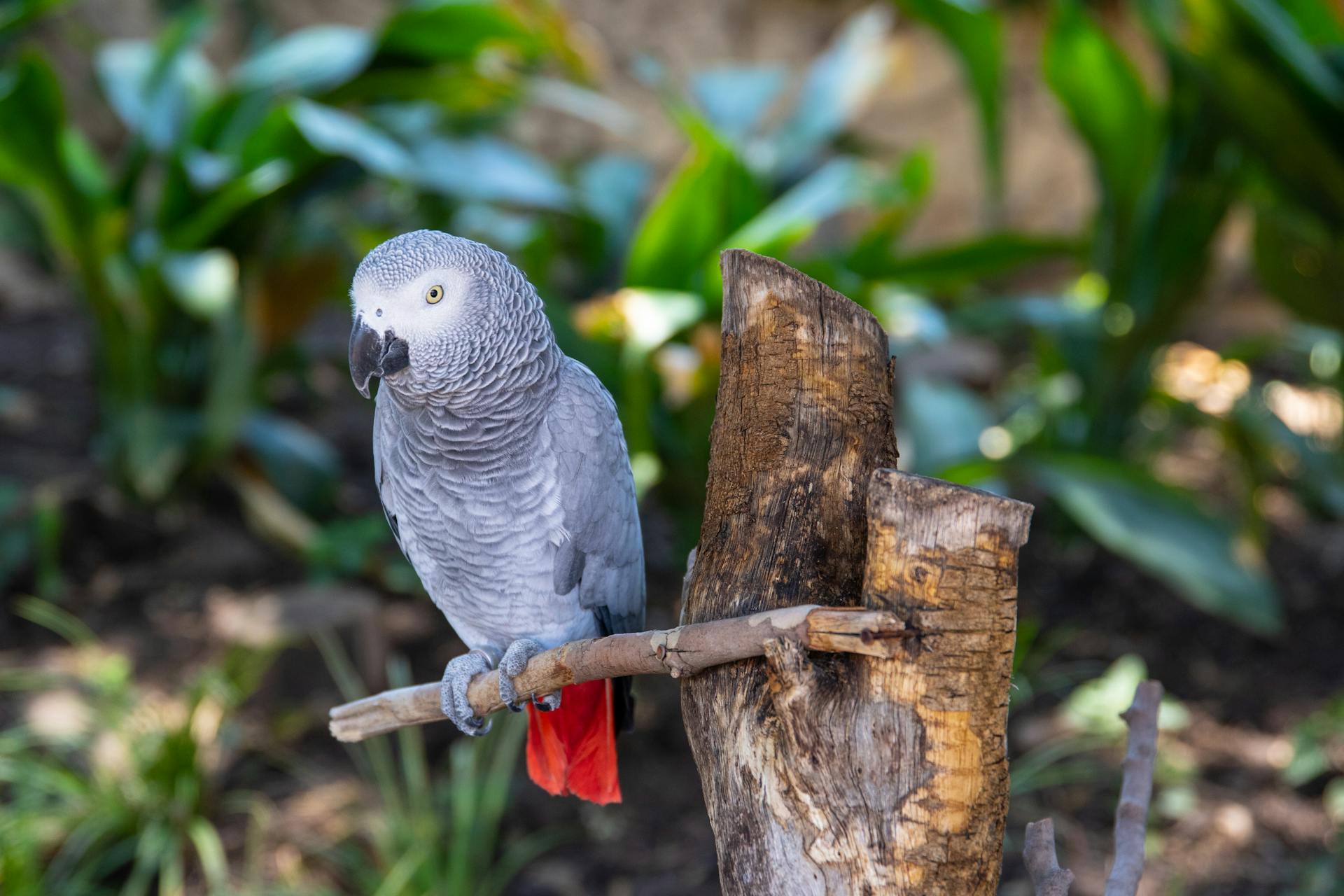

Commuters in Chigasaki have discovered an unlikely new celebrity: a parrot that not only mimics train announcements but also reproduces the station’s iconic departure melodies. With uncanny precision, the bird belts out the Southern All Stars’ “Kibō no Wadachi” before chirping “The next stop is Chigasaki,” leaving passersby laughing, clapping, and sometimes genuinely confused about whether the station speakers are active.
Nicknamed “Syasho-san” by residents, the parrot began imitating sounds after its owner played recordings of Chigasaki Station’s departure music at home. Soon, the bird mastered both the melody and the standard announcements, delivering them with such accuracy that locals now gather to hear its daily “schedule.”
The bird’s performances are not limited to the Southern All Stars. On occasion, it has been heard attempting fragments of other melodies, including the Sagami Line’s tribute to Yūzō Kayama. While not as polished, these attempts further cement the parrot’s reputation as a living echo of Chigasaki’s musical heritage.
Musical Heritage of Chigasaki Station
The parrot’s talent resonates deeply because Chigasaki Station itself has a unique musical identity. In 2014, the Southern All Stars’ song “Kibō no Wadachi” was adopted as the departure melody after a citizen signature campaign gathered more than 10,000 names. The choice honored frontman Keisuke Kuwata, a Chigasaki native, and celebrated the band’s memorable hometown concert.
The station has also honored another local legend: singer and actor Yūzō Kayama, a native of Chigasaki and an honorary citizen. In 2021, his classic “Umi Sono Ai” was introduced as the departure melody on the Sagami Line platforms, marking both the line’s 100th anniversary and Kayama’s 60 years in entertainment.
Against this backdrop, the parrot’s mimicry feels less like a novelty and more like a continuation of Chigasaki’s tradition of blending music with daily life.
Voices from the Community
For many residents, the parrot has become more than entertainment; it’s a symbol of local pride. One elderly woman who has lived near the station for decades remarked, “I never thought I’d hear ‘Kibō no Wadachi’ from a bird. It feels like Chigasaki itself is singing back to us.”
A group of high‑school students, meanwhile, has started filming the parrot’s performances and uploading them to social media. “It’s cooler than any influencer,” one teenager laughed. “This bird is basically our mascot now.”
Not all reactions are straightforward. A shopkeeper near the station confessed, “I love the parrot, but customers keep lingering outside to record it. Sometimes I wonder if I should charge admission.”
And in a more surreal twist, a local surfer mused: “If the parrot can sing Southern All Stars, maybe it can learn to call the waves too. Imagine a bird announcing the tide schedule.”
The parrot’s fame has sparked conversations about how animals can embody local culture. Some residents see it as a symbol of Chigasaki’s unique character, where surf, music, and trains intertwine. Others joke that JR East should hire the parrot to boost commuter morale.
We celebrate this feathered announcer as proof that even in a seaside town defined by waves and melodies, joy can arrive in unexpected forms. In Chigasaki, kindness and culture now travel on wings, a gentle proof that local heritage can be echoed not only by speakers, but by feathers.